Key takeaway: Turquoise forms through geological processes requiring specific copper-rich conditions over millions of years, or through laboratory methods using powdered metals and binders under high heat and pressure. Authentic versions require precise combinations of minerals—typically 25-30% copper oxide and 20-25% aluminum oxide—simulating natural precipitation patterns in arid environments.
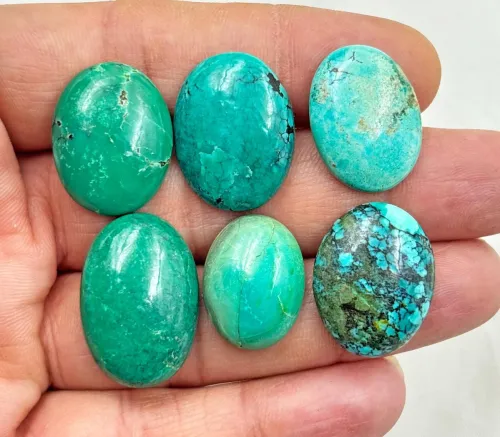
Imagine finding a vibrant blue stone while hiking the arid landscapes of Arizona. You wonder: could this stunning color be recreated at home? Turquoise's complex origin story clashes with common assumptions that it's easily manufacturable. This guide bridges that gap, unpacking six key misconceptions about how turquoise forms—from geological timelines to color myths—equipping you to distinguish natural marvels from clever imitations. Let’s start with what you likely thought you knew...
Formation vs. DIY attempts: Can household materials create true turquoise?
Color uniformity: Is consistent blue always a quality indicator?
Durability myths: Does turquoise resist scratches like harder gems?
Matrix patterns: Does purity guarantee authentic material?
Value perceptions: Are lab-created versions compositionally identical?
Origin impacts: Do all mineral-rich locations produce similar turquoise?
Many assume turquoise can be kitchen-made by mixing basic chemicals. This likely stems from craft projects imitating surface colors. The reality involves more intricate processes: Natural turquoise develops when copper-rich groundwater interacts with aluminum phosphates in dry regions over millennia, while synthetic versions require industrial-grade mineral powders, epoxy binders, and temperatures exceeding 100°C to mimic geological conditions.
The common belief that turquoise always has pure, uniform blue misrepresents its essence. This expectation overlooks natural chemistry. Copper concentration controls blue tones (sky-blue at 25-30% oxide content), while iron introduces greenish hues—creating spectrum variations further influenced by mineral streaks called "matrix." Synthetic versions often hyper-saturate colors unnaturally.
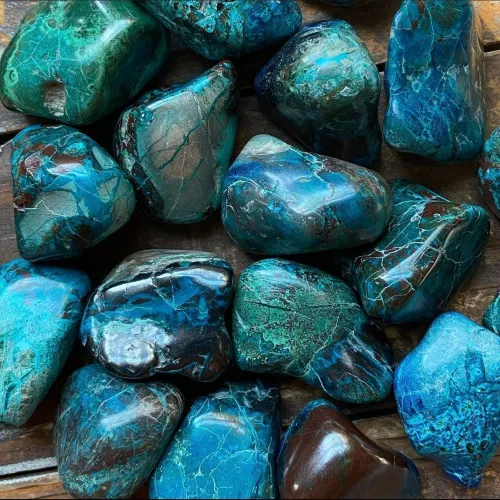
Unlike popular belief, turquoise isn't inherently scratch-resistant like diamonds or sapphires. With a moderate 5-6 Mohs hardness rating, it can fracture easily. Natural pieces reveal micro-pores impacting durability; synthesized versions use polymer stabilizers which may offer temporary support but degrade under UV exposure. Observe these characteristics with a flashlight at angles.
Test luster variation: Rotate stones under light - natural pieces show irregular waxiness, synthetics appear uniformly glossy.
Check weight: Heavier specimens may indicate resin saturation in imitations.
Contrary to the "clean stone equals quality" assumption, genuine turquoise contains signature matrix patterns—irrid brown-black webbing from host rocks like pyrite. These inclusions tell its geological story. Imitations often display repetitive patterns or manufactured "cracks," identifiable through magnification. Note: Open pores suggest untreated authenticity.
Artificially created turquoise is different compositionally and in value. While mimicking appearance, synthetic alternatives rely heavily on dyes and binders. Acetone swab tests often reveal color bleeding, unlike mineral-rich natural stones formed over geological timescales. Genuine pieces may develop patina over years—a sign of porous, untreated turquoise.
Not all mineral-rich areas produce identical turquoise. Assumptions about universal formation overlook location-specific chemistry. High-altitude copper deposits in Iran yield distinct sky blues due to low iron content, while Arizona mines produce greens from iron interplay in specific pH groundwater (5-7), explaining why environmental histories dictate unique characteristics.
Start with these field-tested strategies: First, try the light-shift test—observe how colors respond to sunlight versus incandescent bulbs (natural stones shift subtly). Second, compare matrix patterns; random imperfections indicate authenticity. Remember, weight and temperature tests are complimentary tools: genuine stones warm faster against skin while synthetic resins feel cooler longer. These observational skills turn every turquoise encounter into a discovery moment.
How do synthetic methods differ from geological formations?
Natural turquoise requires millennia of mineral precipitation in perfect conditions, whereas lab versions compress the timeline using powdered materials and chemical binders with less complex crystallization.
Why does turquoise change color after years?
Porosity allows exposure to oils and acids, potentially altering untreated stones. Stabilized versions resist this by using sealants, but may reduce organic authenticity.
What defines authentic material versus plastic fakes?
Perform scratch tests on discreet areas: authentic stones (5-6 Mohs) resist steel knives better than softer plastics. Sound tests also distinguish mineral density—real turquoise produces higher-frequency pings.


$
