Real turquoise can often be identified through natural color variations and spiderweb-like matrix patterns. Simple home tests like checking hardness with a penknife might offer clues, but professional gemological assessment remains the most trustworthy verification method for authentic specimens.
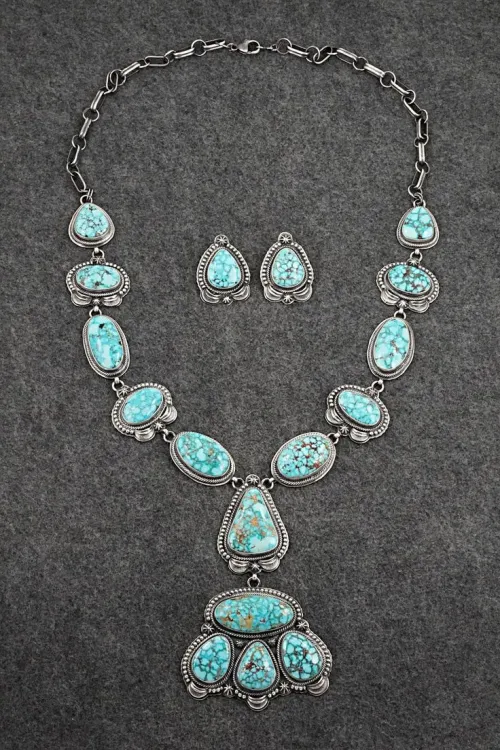
Picture yourself browsing a jewelry stall abroad. That stunning sky-blue pendant catches your eye – "100% Persian turquoise!" claims the seller. Should you trust it? Or recall your grandmother's vintage turquoise ring, its once-vivid color now mottled and changing. Many collectors face these moments of genuine uncertainty. This guide walks with you through the nuances of distinguishing authentic turquoise from lookalikes. We'll unpack frequent assumptions about color uniformity and origins, then explore telltale signs visible with basic tools. By the end, you'll understand why that perfect bright-blue stone might actually hint at artificial treatment, while irregular veins could signal authenticity. Together, we'll build confidence in identifying genuine turquoise gems.
Is a flawless blue surface really trustworthy?
Should real turquoise avoid visible vein patterns?
Does Persian origin guarantee authenticity?
Are treated stones automatically deceptive?
Can a simple scratch test settle all doubts?
Many assume genuine turquoise displays uniform robin's-egg blue in every fragment, avoiding greenish tones at all costs. This belief comes from iconic museum pieces and high-end jewelry displays. But this expectation may ironically lead you toward artificial stones.
Natural turquoise typically contains color inconsistencies where iron and copper traces interact. Greenish-blue hues frequently emerge in authentic specimens, especially near matrix lines. Synthetic turquoise often achieves perfect consistency through controlled manufacturing processes. Iron concentration variations might naturally shift blues toward green, making slight heterogeneity a potential marker of authenticity rather than imperfection.
Examine the stone under different lighting conditions – natural sunlight reveals subtle transitions that artificial light can flatten. Look for gentle gradients rather than sharp divisions between colors. These organic shifts occur where mineral-rich fluids interacted unevenly with host rock over millennia.
Focus magnification along edges and drill holes. Concentrated dye often accumulates in crevices on imitation stones, while natural coloration remains consistent throughout cross-sections. Use this observation with others since stabilization treatments might cause surface-level variations.
Another common assumption? Authentic turquoise should be entirely free from dark veins or host rock fragments – completely "clean". People often associate matrix-free appearances with higher purity and value.
In reality, webbed or dendritic patterns of darker minerals like pyrite or quartz frequently indicate authentic geological formation. These "matrix highways" form when turquoise crystallizes within fractured host rock – their randomness is almost impossible to fully replicate synthetically. While heavily included stones exist, even minimal matrix patterns often serve as nature's signature. Complete absence of matrix could indicate manmade imitation.
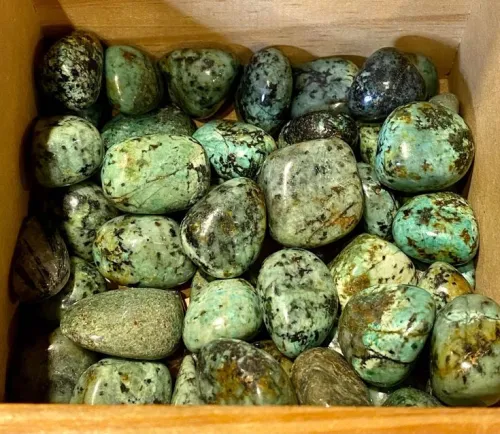
Study the stone through a 10x loupe, observing whether veins travel organically through the material. Genuine matrix appears chaotic with branching patterns, while synthetics might imitate with uniform lines. Touch textured surfaces gently with fingertips – earthy minerals feel slightly gritty compared to smoother resin-composites.
Many seekers prioritize stones labeled “Persian” or “Nevada” believing origin determines authenticity and quality, assuming renowned mines produce uniformly superior material.
Quality ultimately depends more on mineral composition than geography. Copper concentration determines color saturation, while iron levels create unique characteristics. All mining regions produce high and low-grade stones. Synthetic substitutes often replicate region-specific colors. While Iranian and Arizona deposits remain significant, stabilized Chinese materials can also meet quality standards. A stone's physical properties speak louder than its passport.
A prevalent misunderstanding assumes natural turquoise requires no treatments. People often classify stabilized stones as "fake" due to unfamiliarity with gem preservation methods.
Approximately 85% of modern turquoise undergoes stabilization processes – typically resin infusion – to reduce porosity and prevent oil absorption that may cause discoloration. This practice doesn't equal deception but rather practical adaptation for durable jewelry. Crucially, reputable sellers disclose treatments. Untreated specimens might display porous surfaces and change color upon direct skin contact after extended wear.
Many believe home hardness checks – scratching stones with simple tools – reliably confirm authenticity, thinking genuine turquoise always resists minor damage easily.
While authentic turquoise typically reaches 5-6 on the Mohs scale, test outcomes might vary with tool composition. Steel pocket knives register higher than 6 Mohs and could damage even real stones. Gentle testing in unobtrusive areas remains crucial. Support hardness observations with thermal checks – genuine mineral warms slower against skin than plastic alternatives.
Next time you evaluate turquoise, start with these observational priorities in ordinary settings. Notice inconsistent colour distributions and natural matrix patterns through simple magnification – smartphones with macro lenses suffice. Compare weights against known real specimens; genuine stones feel substantially denser than plastic imitations. Request treatment disclosure documentation when purchasing.
Remember, stabilized turquoise offers practical durability for everyday wear despite altered porosity. If unsure about an heirloom piece or market find, professional analysis brings definitive clarity through spectroscopic testing.
What distinguishes real turquoise from dyed howlite?
Magnification reveals howlite's characteristic branching gray markings beneath surface dye – absent in genuine turquoise. Natural mineral veins appear differently under magnification than artificial coloring.
Are stabilized turquoise stones considered genuine?
Stabilization alters porosity through resin infusion but retains the underlying mineral structure. Disclosure is essential, while untreated stones require greater care to maintain appearance.
Why might untreated turquoise change color over time?
Porous surfaces slowly absorb skin oils, liquids, or environmental chemicals that can alter color through chemical interactions. Stabilization prevents this inherent characteristic.


$
